October 30, 2026



The first proper Italian outdoor market is a shock in the best sense. A long row of stalls in a piazza, rails of linen shirts snapping in the breeze, a woman calling prices over the noise, a man selling leather belts off a folding table. It is also remarkably easy to buy badly. Not because the clothes are poor — plenty are excellent, and some cost less than lunch. Markets simply don't work like shops. No fitting room, no returns desk, no assistant to fetch another size from the back. Most disappointments come down to five habits, and every one of them is easy to correct.
Italian sizing is its own dialect, and market sizing is a dialect of that dialect. A woman who wears an Italian 42 in a department store can be a 44 at one stall and a 46 at the next, because stock comes from different producers, some of it runs small on purpose, and knitwear that has been folded and unfolded for two seasons quietly stretches. Men's jackets are worse: the number on the tag is usually the chest measurement in centimetres, so a 48 jacket has nothing to do with a 48 trouser waist.
Then there are the letters. S, M, L on a rail of shirts made for export tells you very little, and taglia unica — one size — means exactly what it says, which is that the garment will fit some people beautifully and others not at all.
Before you go, measure a jacket and a pair of trousers that already fit you well: shoulders, pit to pit, sleeve length, waist when laid flat. Write it on your phone. In the market, hold the garment up against yourself and watch where the shoulder seam falls — that is the one measurement alteration can't fix cheaply. Ask posso provarlo? and see what happens. Some sellers will let you pull a shirt on over what you're wearing, or hold up a sheet of fabric while you try something under it. Others will refuse, and that is their right. Either way, wear fitted clothing on market day so you can judge a fit without a mirror.
Italian markets run on two parallel economies. One stall has a hand-written sign reading prezzo fisso and a seller who will not move a euro. Two stalls down, the price is a starting point. Learning to read which is which takes about ten seconds of watching, and getting it wrong is the fastest way to be politely ignored.
A few rules that work. Don't haggle over a five-euro item, and don't haggle in front of a queue at the busiest hour of the morning — you are asking someone to lose face in public. Never open with a lowball figure on a piece you clearly love.
The most effective move is also the most polite: buy more than one thing and ask for a price on the bundle. Quanto mi fa per questi due? — how much for these two? Sellers would rather move three shirts at a small discount than one at full price, and the question keeps the conversation friendly. Ask once, accept the answer gracefully, and if it isn't enough, thank them and walk on. Cash helps, and having the right notes ready shows you meant it.
One thing to avoid: agreeing a price and then producing a card or a note far larger than discussed. Bring small denominations, keep them separate, and count your change before you step away.
A photograph of a shirt on a hanger and a shirt held up to the morning sun are two different objects. The stall's lighting is designed to flatter; the fabric has been through a warehouse, a van and a lot of hands. Ten seconds of handling saves a lot of regret.
Read the composition label, but treat confident claims with mild scepticism and let your hands make the final call. "100% linen" that feels slick and heavy is probably a blend, whatever the tag says.
Timing changes both the selection and the mood. The first hour is for choosing: rails are still tidy, sizes are all present, and sellers have time to talk. Mid-morning to early afternoon is the crush, when the good pieces are gone from the front rail and everyone is too busy to negotiate.
The last hour is for bargains. Sellers packing a van would rather sell at a discount than fold it back into a box, and a polite enquiry late in the day is often met with a shrug and a better number. Don't push it if the answer is no — by then they are tired, and it will read as pressure.
Two more timing notes. Market days are local and irregular: some towns hold theirs weekly, some twice a month, and a few large city markets run daily. Ask at a bar or check the town's notice board rather than assuming. And in August, many stalls simply disappear while the country goes to the sea — a market that is heaving in May can be three stalls and a fruit van in the middle of the month.
The moment money changes hands, your leverage ends. So do the last checks before the wallet opens, not after.
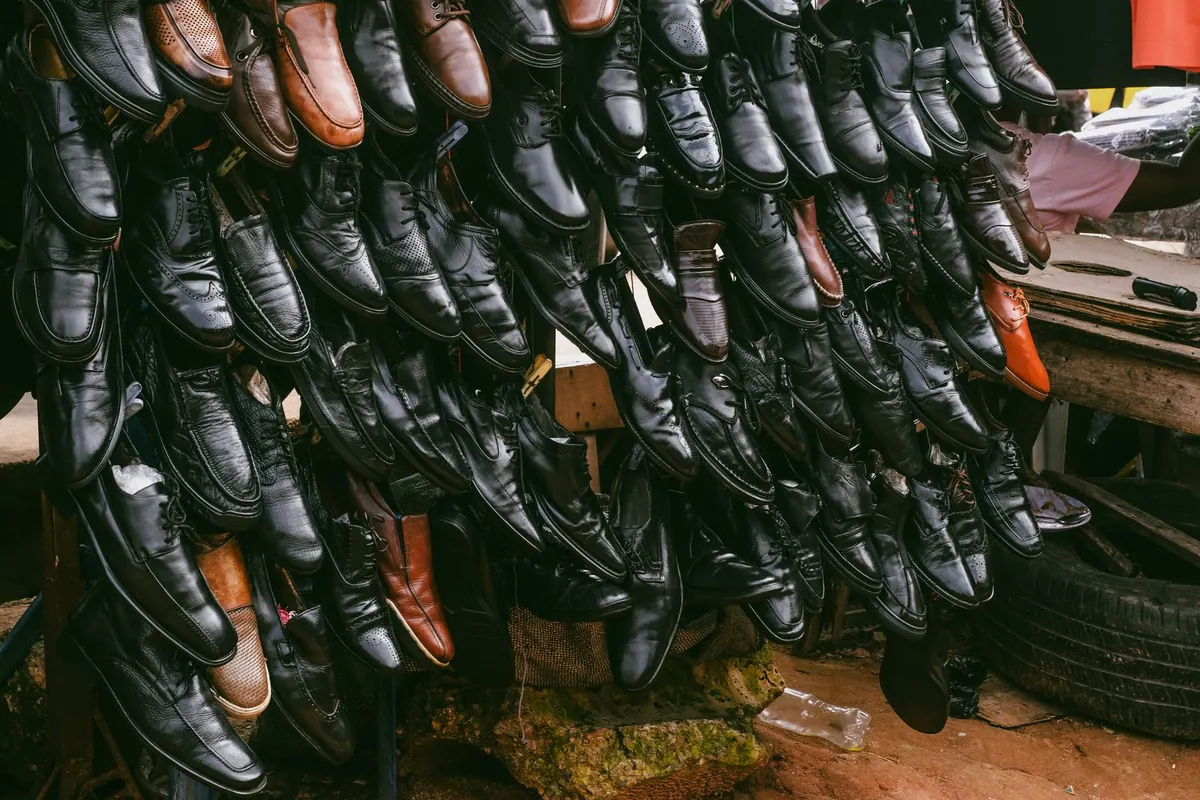
Make sure the pair of shoes is actually a pair and the same size — it happens more often than anyone admits. Check both sleeves, both armpits, the hem, the zip, the buttons. If the stall has a mirror, use it. If a piece has a genuine fault, point it out and ask for another; most sellers will swap rather than lose the sale.
Then ask about returns before you pay, not after. Many market stalls do not accept returns for a change of mind and will only exchange a genuinely faulty item, so get a clear answer while the seller is still smiling. If you may need proof of purchase, ask for a receipt; some sellers will write one, others will tell you plainly that they don't. Either answer is useful information.
None of this takes the pleasure out of a market morning. It just means you come home with three things you wear constantly instead of five you liked under a striplight. Wear comfortable shoes for the cobblestones, carry water in summer, and leave time for a coffee at the bar across the square — half the point of the outing is the outing.
Photo: anngadpandey / Pixabay

Daily style, beauty, and life inspiration..
Copyright © 2026 Ambra Oggi. All rights reserved. Ambra Oggi.