October 30, 2026



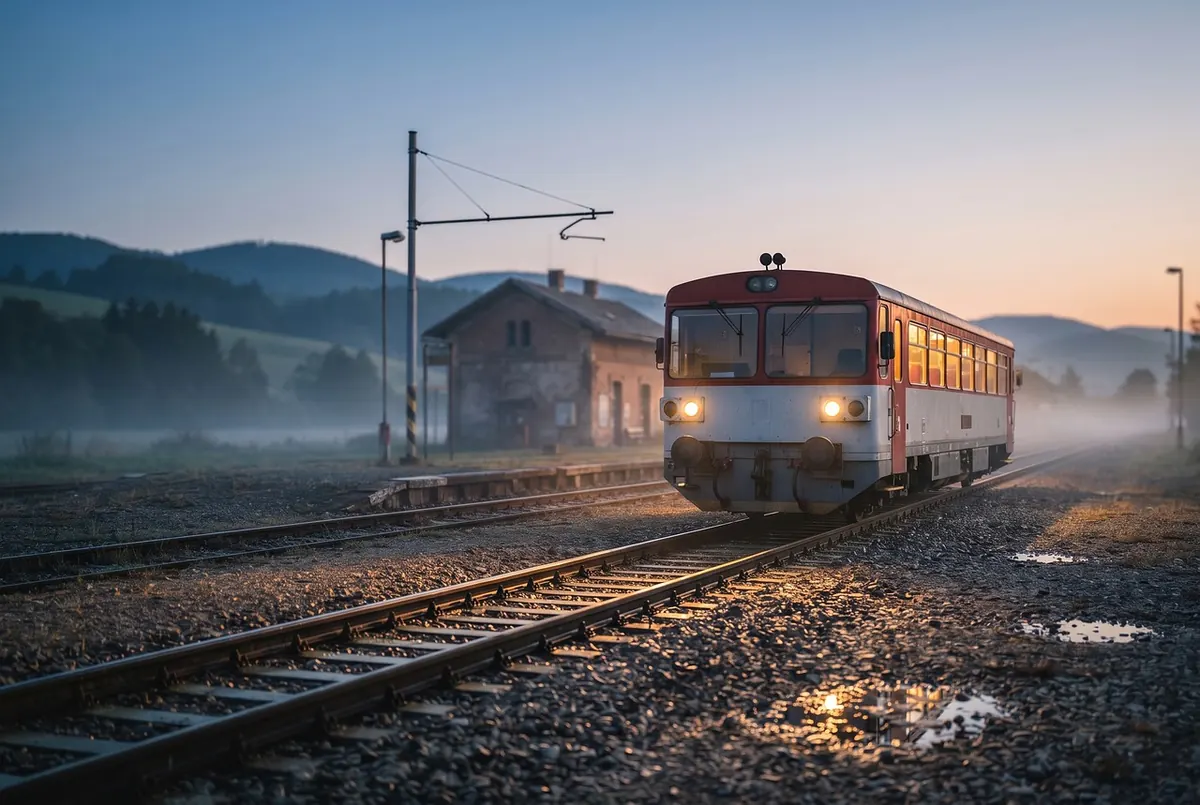
A two-carriage train, a platform with six people on it, and a town of pale stone waiting a ten-minute walk away. This is the version of Italy that rewards travellers who trade the high-speed corridor for the slow regional line — and a week is enough to taste it properly.
The good news is that planning this kind of trip is simpler than most people expect. Italy's regional rail network reaches hundreds of towns that never appear on a three-day itinerary, and you do not need a tour, a car, or a rail pass worth several hundred euros. You need a route built around one or two lines, an honest sense of how far you can move in a day, and the discipline to leave gaps in your schedule. Here is how to put it together.
The most common beginner mistake is collecting towns from photographs and then trying to connect them. In small-town Italy, the rail line dictates the trip. Choose a region, find the regional line that threads through it, and let that line become your spine.
Good starting points include Umbria's Perugia–Spoleto–Terni–Orvieto corridor, Puglia's Bari–Ostuni–Lecce line, the Turin–Bra–Alba route in Piedmont, and the Veneto line from Padua out to Bassano del Grappa. Each offers a handful of towns within 20 to 60 minutes of one another, which is exactly the density you want.
Then apply a simple rule: three bases in seven nights, two towns per base. Moving every night sounds romantic and feels exhausting by day three, because every move costs you a morning of packing, a station walk, and a check-in window.
Some Italian stations sit a couple of kilometres below the historic centre, and a few towns have no station at all. Todi's station is down in the valley; Urbino is reached by bus from Pesaro. Before you commit to a base, open a map, drop a pin on the station, and measure the walk to your accommodation. Anything under fifteen minutes on foot is comfortable with luggage. Anything over thirty minutes means you are relying on a local bus or a taxi that may not exist on a Sunday.
Regional timetables are not the metro. On secondary lines, trains can thin out dramatically at midday, and Sunday services may run to four or five departures a day.
Do the timetable work first, on the Trenitalia app or website, using your actual travel dates rather than a generic weekday. Check three things for every leg:
Look out for trains marked Regionale Veloce: they skip smaller stops and can cut a journey in half. Also keep an eye on the news for announced rail strikes, which are published in advance and usually list the guaranteed services. If a strike falls on your moving day, you may need to shift it.
Most of your travel will be on Regionale trains, and these are refreshingly straightforward. Fares are set by distance, not by demand, so buying early saves you nothing — but you also cannot be shut out, because regional trains do not sell out. Buy on the day, minutes before departure, and you are fine.
Digital tickets arrive as a QR code and need no stamping. If you buy a paper ticket from a machine or a tobacco shop, stamp it in the small validation machine on the platform before boarding. Travelling with an unstamped paper ticket can be treated as travelling without one.
High-speed Frecciarossa and Intercity trains work differently: prices climb as departure approaches and a seat reservation is included. Use them only for the long first and last legs of your trip. Italo is comfortable but serves major stations only, so it rarely helps in small towns.
Remember that local buses are separate. Some of the loveliest towns — Urbino, Locorotondo, the villages of the Val d'Orcia — are reached by bus or by private rail companies with their own tickets. Build those connections into your day, not as an afterthought.
Small stations mean stairs, and many have no lift. A heavy hard-shell suitcase with small wheels is the wrong tool. A 40-litre backpack or a soft bag you can carry up a flight of steps will do more for your week than any itinerary tweak.
Screenshot your tickets and timetable each morning. Rural coverage is patchy, and a dead battery at an unstaffed station is a needlessly stressful way to spend an afternoon.
Sixty to 120 kilometres of rail travel per day is the sweet spot. In practice that means one town in the morning, lunch, a slow wander, and a return by late afternoon — or a single town explored properly with a long lunch in the middle.
Do not schedule more than two towns in a day, and never book a timed entry on a moving day. A workable weekly shape looks like this: arrive at base one and settle in; spend two days on short hops to nearby towns; move to base two on the fourth morning; use the next two days for day trips; return on the seventh. That gives you three moves and plenty of slack.
Small towns reward boredom. The best hours are often the ones you did not plan — the second coffee, the church that happens to be open, the conversation with the person running the alimentari.
Book accommodation within a fifteen-minute walk of the station or in the historic centre, whichever is closer. Ask about luggage storage on your moving day: leaving a bag at the hotel while you visit one more town is one of the small luxuries of travelling by rail.
Check restaurant opening hours as carefully as you check train times. In smaller towns, kitchens often close in mid-afternoon, and Monday or Tuesday closures are common. A base with one good trattoria open on a Sunday night is worth more than a picturesque address half an hour from the platform.
Seven days out, do this in one sitting: confirm each leg on the Trenitalia app for your exact dates, note the last return train for each day, download offline maps of every town, message your accommodation about arrival times, and photograph your passport and tickets into a folder on your phone. Then leave two afternoons completely empty.
That is the whole system. A line, three bases, honest distances, and a willingness to move at the speed of a two-carriage train. You will see fewer towns than you planned, and remember more of them.
Photo: 11040735 / Pixabay
Daily style, beauty, and life inspiration..
Copyright © 2026 Ambra Oggi. All rights reserved. Ambra Oggi.