October 30, 2026


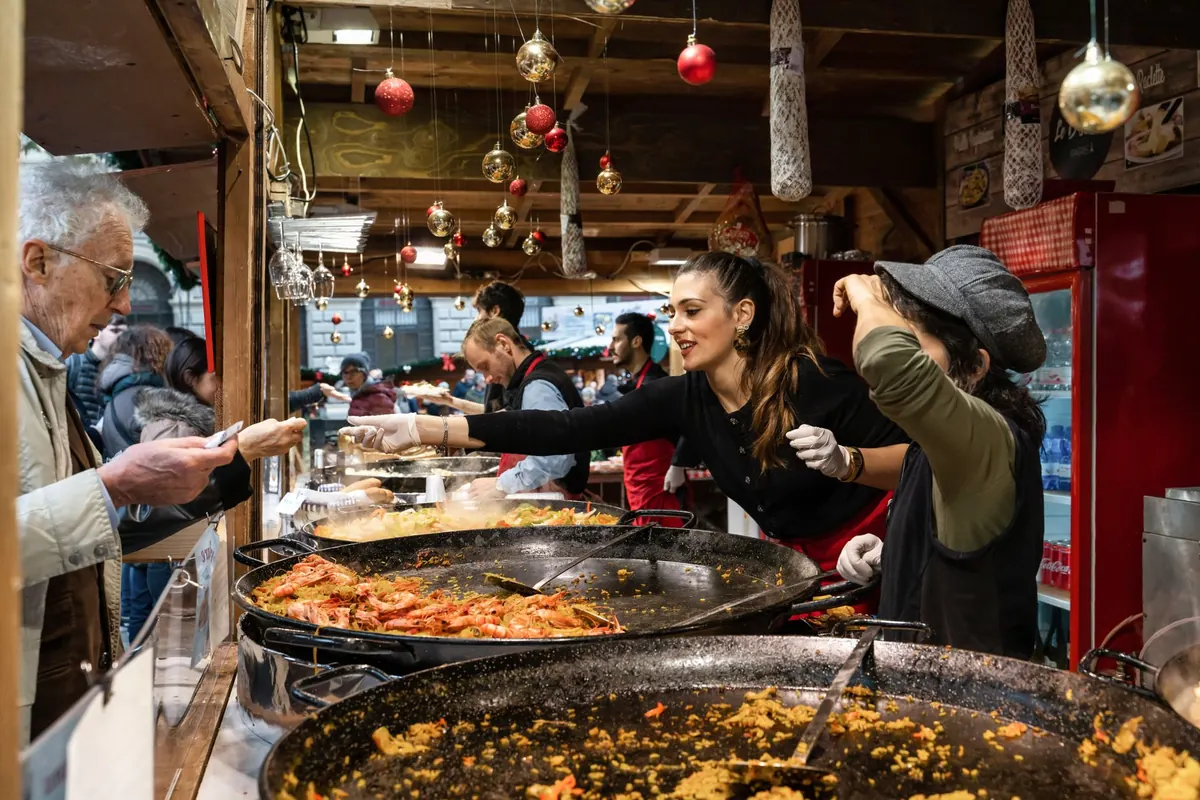
The last week of August is when Italy changes gear. Beach umbrellas start coming down, the light goes gold by seven, and hand-painted banners appear on roundabouts advertising a sagra in a village you have never heard of. These are not curated street-food markets or travelling festivals. They are working towns that cook for a few evenings, usually to fund something specific — the parish roof, the volunteer ambulance, the school trip — and they reward anyone willing to show up with an appetite and a little patience.
The word gets used loosely, but a true sagra is built around one ingredient or one dish: porcini, peppers, snails, porchetta, gnocchi, salt cod. A festa is broader and often tied to a saint's day or a harvest, with a procession, a band and a market stall or two. Both tend to be run by a Pro Loco association or a parish committee, which means the people serving you are teachers, retired farmers and teenagers from the village, working a shift after their own day job.
That has consequences. The menu will be short — often four or five items, sometimes printed on a single laminated sheet taped to a tree. The food will be good in a plain, generous way rather than refined. Seating will be long tables under a marquee or strings of bulbs in the piazza. Nobody will take a reservation, and nobody will rush you. Adjust expectations accordingly and you will have a far better evening than the person hunting for something "authentic" and finding a queue instead.
This is the hinge of the Italian food year. Tomatoes are still worth eating, aubergines are at their best, and the first porcini come down from the Apennines after a decent spell of rain. In mountain villages you will find mushroom sagre with tagliatelle ai funghi and grilled porcini sold by weight. In the south, peppers and aubergines dominate — parmigiana, peperoni ripieni, grilled vegetables with oil and mint. Elsewhere it is porchetta carved into panini, wild boar stew, polenta on cool evenings, freshwater fish by the lakes, and seafood sagre in coastal towns where the fishing fleet still lands the catch.
September brings the grape harvest, so expect festa dell'uva processions, must-scented air and stands selling nothing more complicated than bread, salami and a glass of the local red. Honey, chestnuts and truffles come later; do not expect white truffle in August, whatever the sign outside the restaurant says.
Portions are usually large and prices modest by restaurant standards. Menus are often fixed or near-fixed, so if you are vegetarian, ask before you queue — "c'è qualcosa senza carne?" is enough — and accept that the answer may be a plate of grilled vegetables and bread.
Most sagre run a two-step system. You pay at a cash desk (cassa), receive a paper receipt or plastic tokens (gettoni), then hand those over at the food counter. Drinks are usually a separate stand entirely, frequently staffed by someone who also runs the coffee machine. Learn the shape of this before you join any line, or you will spend ten minutes queueing in the wrong place.
Bring cash in small notes and coins. Many sagre now take cards, but the queue moves fastest when you pay with a ten-euro note rather than a fifty. Keep your tokens visible; losing them in a pocket is a common and entirely self-inflicted tragedy.
Service generally starts around 12.30 for lunch and between 19.30 and 20.00 for dinner, and the first hour is the busiest. Arriving twenty minutes before opening means you will eat quickly; arriving at 21.30 means shorter queues but a thinner choice, since the popular dish may have run out. On Sundays, the 20.00–21.00 window is the crush, when local families arrive with grandparents and small children.
If you have flexibility, go on a weekday, or on the opening night rather than the closing Saturday. Parking is often in a field on the edge of the village, signposted with a hand-lettered "P" and managed by a man with a torch; follow the flow and walk the last few hundred metres. Roads through the centre close for processions, so assume you will not drive to the door. Village centres are cobbled or gravelly — leave the thin-soled shoes at home.
Tables are shared. If the marquee is full, sitting down next to strangers is normal and expected, not an imposition. Do not claim a table with a jumper while your partner is still in the queue if there are people standing with full trays. Clear your own plates to the collection point, sort rubbish into the labelled bins, and put the plastic cups back where you found them — some sagre charge a small deposit, and the volunteers have to count them at midnight.
Tipping is not expected. A "grazie" and a genuine comment about the food ("buonissimo") goes further. Keep children within sight in crowded piazzas, ask before petting dogs, and remember that many of these events happen on the doorstep of a church: voices carry, and the last tables are cleared quietly.
You do not need much, but the handful of things below make the difference between a charming evening and a fumbling one.
Go with a loose schedule, order what the village is proud of, and let the evening run at its own pace. That is the whole point of a late-summer sagra: a few hundred people, one long table, and food that tastes of the place it came from.
Photo: yusuf coşkun / Pexels
Daily style, beauty, and life inspiration..
Copyright © 2026 Ambra Oggi. All rights reserved. Ambra Oggi.